
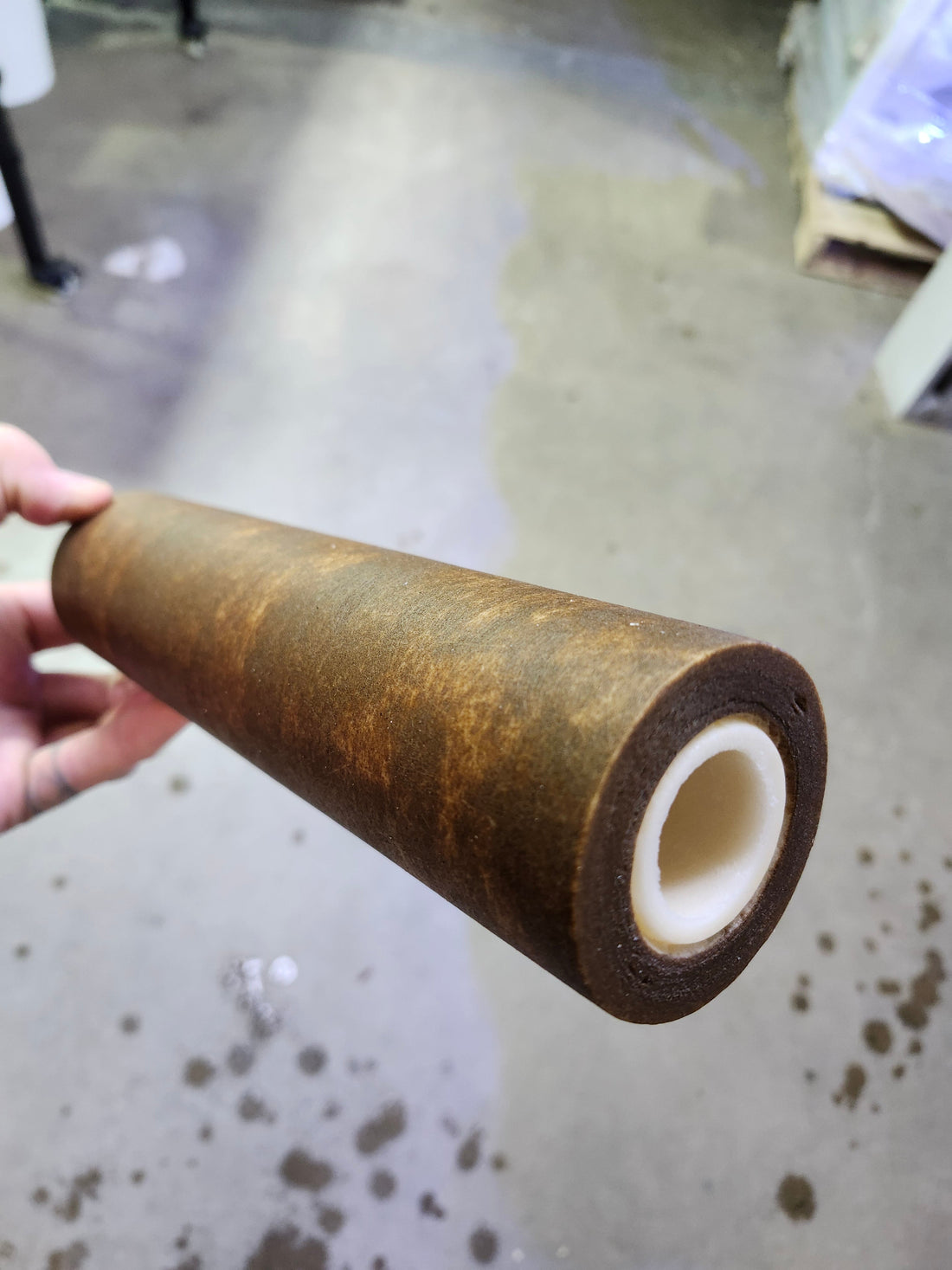
What Is In Your Water? - Reverse Osmosis - Sediment Filter - First Filter
Every reverse osmosis system begins with a humble but essential component: the sediment filter. As the first line of defense in your RO system, the sediment filter captures the physical particles, including dirt, sand, rust, and debris, that would otherwise damage or clog every downstream component. Without it, your carbon filters and RO membrane would fail prematurely, costing you far more in replacements. Understanding your sediment filter is the first step toward maintaining a system that delivers clean water for years. And once your system has done its job, there's a final step that transforms clean water into vibrant, structured water.
What Is a Sediment Filter?
The sediment filter is the first stage of filtration in virtually every reverse osmosis system. It's positioned as the initial barrier that incoming water passes through before moving on to carbon filters and the RO membrane.
Most sediment filters are constructed from spun polypropylene, a durable, food-grade material that's specifically designed to trap physical particles. The filter is typically cylindrical, with a gradient density structure that captures larger particles on the outer layers and progressively finer particles as water moves toward the center. This design maximizes the filter's dirt-holding capacity and extends its useful life.
Sediment filters are rated by their micron size, the measurement that indicates the smallest particle the filter can reliably capture. Common ratings for RO pre-filtration are 5 microns and 1 micron. A 5-micron filter captures particles roughly 14 times smaller than the diameter of a human hair, while a 1-micron filter provides even finer protection.
What Does the Sediment Filter Capture?
The sediment filter is specifically designed to remove physical, particulate contaminants from your water supply. It captures dirt and soil particles, sand and silt, rust flakes from aging pipes and water mains, sediment disturbed during municipal water main work, scale and mineral deposits, and other suspended solids that give water a cloudy or turbid appearance.
It's important to understand what sediment filters do not remove: they are not designed to capture dissolved chemicals (that's the carbon filter's job), dissolved minerals and salts (that's the RO membrane's job), or bacteria and microorganisms (consider UV filtration for biological protection). Each component in your RO system has a specific role: the sediment filter handles the physical contaminants so downstream filters can focus on their specialties.
How Does the Sediment Filter Work?
Sediment filtration works through a straightforward mechanical process. As water enters the filter housing and passes through the filter cartridge, physical particles are trapped within the filter media's fiber matrix. The gradient density design means that larger particles are captured in the outer, less dense layers of the filter, while smaller particles penetrate deeper before being trapped in the progressively tighter inner layers.
This layered approach is more effective than a uniform-density filter because it prevents the outer surface from clogging too quickly, distributing the particle load throughout the entire depth of the filter and maximizing its capacity and lifespan. As the filter accumulates particles over time, water flow gradually decreases, providing a natural indicator that the filter is reaching its capacity and needs replacement.
The Protective Role of the Sediment Filter
While the sediment filter may seem like a simple component, its protective role in the overall system cannot be overstated. The carbon filters that follow are designed for chemical adsorption, and their porous structure can be physically clogged and rendered ineffective by sediment particles. The RO membrane, with its microscopic 0.0001-micron pores, is even more vulnerable to damage from physical particles that can tear, scratch, or permanently block its delicate surface.
By capturing these particles before they reach downstream components, the sediment filter extends the life of your more expensive carbon filters and RO membrane, maintains optimal flow rates throughout the system, prevents premature system failure and costly repairs, and ensures each downstream filter can perform its intended function without interference from physical debris.
When to Replace Your Sediment Filter
Sediment filters have a finite capacity for particle capture. Once the filter media is saturated, it can no longer effectively remove particles and begins to restrict water flow. For most residential RO systems, sediment filters should be replaced every 6-12 months, depending on incoming water quality, daily water usage volume, local construction or water main activity, and whether your water comes from a municipal supply or well.
Homes on well water or in areas with older infrastructure may need more frequent replacement, while homes with newer plumbing and clean municipal water may get closer to 12 months from each filter.
Signs Your Sediment Filter Needs Replacement
Watch for these indicators that your sediment filter is reaching the end of its useful life: noticeably reduced water flow or pressure from your RO faucet, the filter appears visibly discolored (brown, yellow, or grey) when inspected, water taste or clarity begins to decline, the system takes longer than usual to fill the storage tank, and you notice sediment or particles in your filtered water. When in doubt, replace the filter. At $10-20 per cartridge, it's one of the most affordable investments in your water quality.
Complete Your Water's Journey: From Clean to Alive
Your sediment filter starts a multi-stage process that gives you exceptionally clean water, but clean water isn't the same as living water. As Dr. Gerald Pollack's research has shown, water's molecular structure directly affects how our bodies absorb and use it. Filtration removes what shouldn't be in your water, but it also strips away the molecular structure and energetic vitality that make water truly nourishing.
The Rius Crystal Charging Chamber ($429) is designed as the final step after your RO system, restoring the structure, minerals, and lifeforce that filtration removes. It connects via standard 1/4" post-filter line and uses a proprietary crystal matrix to restructure, remineralize, and energetically amplify your water. No electricity, no maintenance, no filter changes. Learn more about why filtered water needs restructuring.
Explore the Charging Chamber and feel the difference.
Best Practices for Sediment Filter Maintenance
To get the most from your sediment filter, follow these maintenance guidelines: set a replacement schedule and stick to it (every 6 months is a safe baseline for most households), keep a spare filter on hand so you can replace immediately when needed, when replacing, note the condition of the old filter (a heavily discolored filter may indicate you need to shorten your replacement interval), inspect the filter housing O-ring during replacement and apply food-grade silicone lubricant to maintain a proper seal, and after installing a new filter, flush the system for several minutes before drinking the water.
Frequently Asked Questions
How often should I replace my sediment filter?
Most sediment filters should be replaced every 6-12 months. If your water comes from a well, has visible sediment, or your area has experienced water main work, lean toward the 6-month end. A clogged sediment filter reduces flow and forces downstream filters to handle particles they weren't designed for.
What micron rating should I choose for my sediment filter?
For most residential RO systems, a 5-micron sediment filter provides excellent protection. Some systems use a 1-micron filter for finer filtration, though these may need more frequent replacement in areas with higher sediment loads. Check your system's specifications for the recommended rating.
Can I clean and reuse a sediment filter?
Spun polypropylene sediment filters are not designed to be cleaned and reused. The gradient density structure traps particles throughout its depth, making effective cleaning impossible. Attempting to reuse a saturated filter puts your downstream components at risk. At $10-20 per cartridge, replacement is the recommended approach.
What comes after filtration?
Once your sediment filter, carbon filter, and RO membrane have removed contaminants, the Crystal Charging Chamber restores what filtration strips away, restructuring, remineralizing, and energetically amplifying your water. It's the final step from clean to alive.
Conclusion
Your sediment filter may be the most affordable and overlooked component in your RO system, but its role is foundational. By capturing physical particles before they reach your carbon filters and RO membrane, it protects your entire system and ensures every stage of filtration works as designed. Maintain it on schedule, and it will keep your water flowing clean for years. And when you're ready to go beyond clean water to living water, the Crystal Charging Chamber completes the journey.
Feel the difference and transform your filtered water into structured, living water.
Questions? Reach us at structure@riuswater.com or call (303) 219-0623.
Previous in the series: understanding reverse osmosis filtration. Next: the carbon filter, the second line of filtration. Browse our reverse osmosis systems.